
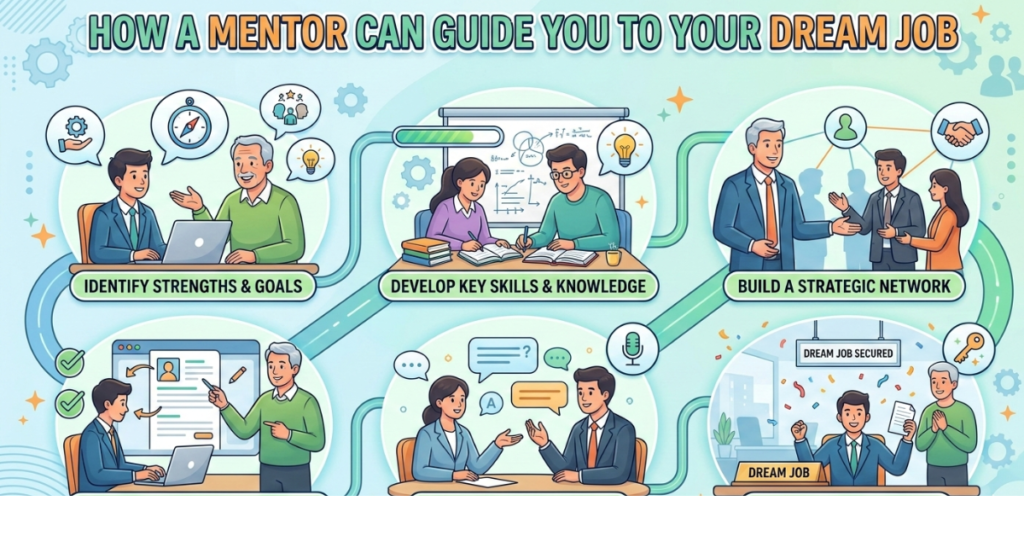

Landing your dream job rarely happens by accident. It’s usually the result of smart decisions, persistence, and—more often than people admit—guidance from someone who’s already walked the path. That’s where mentorship comes in.
If you’ve ever wondered how can a mentors help you along the journeys to your dream jobs, or questioned what qualifies someone as , you’re not alone. Mentorship can feel abstract until you experience it firsthand. This article breaks it down in practical, real-world terms so you can understand why mentors matter, what they actually do, and how to choose the right one.
Why Mentorship Matters in Career Growth
A mentor isn’t just someone who gives advice. They’re a guide, sounding board, and reality check rolled into one. In competitive job markets, mentorship often becomes the difference between guessing your way forward and moving with intention.
Research from Harvard Business Review and Forbes consistently shows that professionals with mentors:
-
Advance faster in their careers
-
Earn higher salaries over time
-
Report greater job satisfaction
Mentorship bridges the gap between theory and experience—something no degree or online course can fully replace.
How Can a Mentor Help You Along the Journey to Your Dream Job?
1. Clarifying Your Career Direction
Many people struggle not because they lack talent, but because they lack clarity. A mentor helps you:
-
Identify strengths you may overlook
-
Spot career paths you didn’t know existed
-
Align your skills with real market demand
Instead of chasing every opportunity, you learn which ones actually move you closer to your dream job.
2. Sharing Real-World Experience You Can’t Google
Mentors bring lived experience. They’ve made mistakes, recovered from setbacks, and navigated office politics you won’t find in textbooks.
They can explain:
-
What a role is really like day to day
-
Which skills matter most in practice
-
Common career traps to avoid early on
This insight saves years of trial and error.
3. Helping You Build Confidence and Professional Identity
Self-doubt is one of the biggest career blockers. A good mentor:
-
Challenges limiting beliefs
-
Encourages you to aim higher
-
Provides honest, constructive feedback
Over time, you stop second-guessing yourself and start owning your professional value.
4. Expanding Your Network Strategically
One of the most underrated benefits of mentorship is access. Mentors often introduce you to:
-
Industry professionals
-
Hiring managers
-
Communities aligned with your goals
These connections don’t guarantee a job, but they dramatically increase your visibility and credibility.
5. Guiding Skill Development and Career Planning
Rather than telling you to “learn everything,” mentors help you focus. They can advise on:
-
Which certifications are worth it
-
When to switch roles or industries
-
How to prepare for leadership positions
This targeted guidance keeps your career momentum strong.
What Qualifies Someone as a Mentor?
Not everyone with experience qualifies as a mentor. True mentorship goes beyond seniority.
Key Qualities of a Good Mentor
Relevant Experience
A mentor should have hands-on experience in your desired field or role—not just general success.
Willingness to Invest Time
Mentorship requires consistency. A qualified mentor shows up, listens, and follows through.
Strong Communication Skills
Great mentors explain complex ideas clearly and tailor advice to your situation.
Honesty and Integrity
They tell you what you need to hear, not just what feels good.
A Growth-Focused Mindset
The best mentors stay curious, adaptable, and open to learning—just like you.
Mentor vs. Coach vs. Manager
| Role | Primary Focus |
| Mentor | Long-term career growth |
| Coach | Specific skill improvement |
| Manager | Job performance and results |
A mentor isn’t there to control your path—only to illuminate it.
How to Find the Right Mentor for Your Dream Job
Finding a mentor doesn’t mean cold-emailing strangers and hoping for the best.
Smart Ways to Connect With Mentors
-
Professional networking platforms like LinkedIn
-
Industry events and conferences
-
Alumni networks
-
Online communities and forums
Start with curiosity, not requests. Relationships grow naturally when there’s mutual respect.
Common Mentorship Myths and the Truth
-
Myth: Mentors must be famous or extremely senior
Truth: The best mentors are often just one or two steps ahead -
Myth: Mentorship has to be formal
Truth: Many mentorships grow organically -
Myth: You only need one mentor
Truth: Different mentors serve different stages of your career
FAQs About Career Mentorship
How can a mentor help you along the journey to your dream job?
A mentor provides clarity, shares real-world insight, expands your network, and helps you avoid costly mistakes while building confidence.
What qualifies someone as a mentor?
Relevant experience, honesty, communication skills, and a genuine interest in your growth are key qualifications.
Do mentors need to be in the same company or industry?
Not necessarily. Industry alignment helps, but transferable experience and perspective can be just as valuable.
Can you have more than one mentor?
Yes. Many professionals benefit from having multiple mentors for different goals.
How often should you meet with a mentor?
Monthly or quarterly check-ins work well for most mentorship relationships.
Conclusion: Turning Guidance Into Action
So, how can a mentor help you along the journey to your dream job? By offering clarity when you’re unsure, insight when you’re stuck, and encouragement when you’re ready to quit. And what qualifies someone as a mentor? Not perfection—but experience, honesty, and a willingness to help you grow.
The next step is simple: start the conversation. Reach out, ask thoughtful questions, and stay open to learning. If you want to deepen your career strategy, explore related articles on professional networking, skill development, and long-term career planning.


