
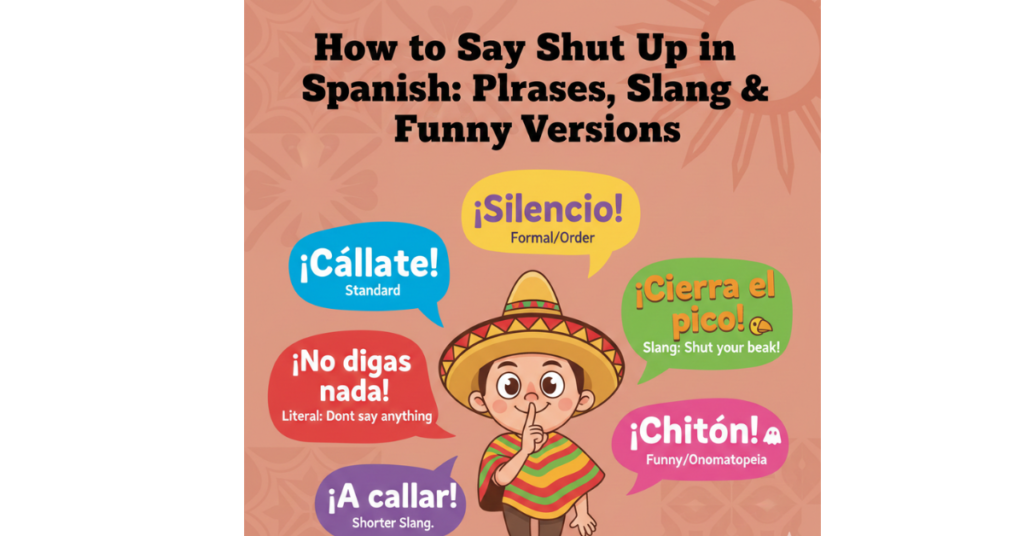

Have you ever been in a situation where you wished you could just tell someone to shut up in Spanish—but weren’t sure how to do it without offending them? Whether you’re learning the language, traveling, or just curious about Spanish expressions, this guide will show you the most common ways to tell someone to be quiet, from polite phrases to slang and even funny alternatives.
Spanish, like English, has multiple ways to express the idea of “shut up,” ranging from formal to playful. Let’s explore them so you can confidently choose the right phrase for any scenario.
1. Polite Ways to Say Shut Up in Spanish
If you want to ask someone to be quiet without sounding rude, Spanish has several polite expressions:
-
Cállese – This is the formal version, used in professional or serious contexts.
-
Cállate – Informal, commonly used among friends or peers.
-
Por favor, guarda silencio – A very polite way of saying “please be quiet.”
Tip: Use the formal cállese with strangers or elders, and cállate with people you know well.
2. Slang Versions: How to Say Shut Up in Spanish Slang
Spanish slang can make “shut up” sound more casual, funny, or even slightly aggressive:
-
¡Cierra la boca! – Literally “close your mouth,” casual but direct.
-
¡Chitón! – Short, punchy, and fun; think “zip it!”
-
¡Qué te calles! – A more forceful way to tell someone to be quiet.
Regional Note: In Mexico, you might hear ¡Cállate la boca! which is a mix of informal and slang tones.
3. Funny Ways to Say Shut Up in Spanish
Sometimes, telling someone to be quiet can be playful or humorous. Here are some lighthearted options:
-
¡Boca cerrada, no entra mosca! – Literally, “closed mouth, no flies enter,” similar to “keep your mouth shut.”
-
¡Cierra el pico! – “Shut your beak!” often used jokingly.
-
¡Shhh… antes de que aparezca un fantasma! – “Shhh… before a ghost shows up!” — a playful, exaggerated way to hush someone.
Humor is a great way to communicate without creating tension, especially among friends.
4. Context Matters: Choosing the Right Expression
When telling someone to be quiet in Spanish, context is everything. Ask yourself:
-
Who am I speaking to? Friend, stranger, elder?
-
What’s the situation? Formal meeting, casual chat, or joking around?
-
How strong do I want the phrase to be? Polite, firm, or funny?
Choosing the right tone ensures your words are received as intended.
FAQs About Saying Shut Up in Spanish
Q1: What’s the most common way to say shut up in Spanish?
A: Cállate is widely used in informal situations and is easy to remember.
Q2: How do you say shut up politely in Spanish?
A: Use Cállese or Por favor, guarda silencio for a respectful tone.
Q3: Are there funny ways to tell someone to shut up?
A: Yes! Expressions like ¡Boca cerrada, no entra mosca! or ¡Cierra el pico! are playful and humorous.
Q4: Is slang different in each Spanish-speaking country?
A: Absolutely. Words like ¡Chitón! or ¡Cállate la boca! may vary in usage and tone depending on the region.
Conclusion
Learning how to say shut up in Spanish isn’t just about the words—it’s about tone, context, and cultural nuance. From polite phrases like cállese, to slang like chitón, to funny expressions that make your friends laugh, Spanish has something for every scenario. Next time you need a quiet moment, you’ll know exactly which phrase fits the situation.


